
 General
Is Online BBA Worth It in India?
Is online BBA worth it in India? Yes, an online BBA can be worth pursuing when the programme is appropriately recognised, fits your career and learning goals, and gives you the flexibility you need. Its value depends on factors such as curriculum, total cost, practical learning, career support and how effectively you use the flexibility alongside internships, projects or work experience.
For students completing Class 12, the format can make it easier to combine an undergraduate business degree with internships, projects or other commitments. For working professionals who still need an undergraduate qualification, it can provide a structured business foundation without requiring them to leave employment. However, professionals who already hold a bachelor’s degree should compare whether a postgraduate programme or a shorter specialised qualification would better address their upskilling goal.
The key question is therefore not whether online learning is universally better or worse than campus study, but whether its trade-offs fit your circumstances. This guide compares validity, cost, career scope, learning experience, limitations and the checks to complete before enrolling.
Is an Online BBA Valid in India?
A UGC-recognised university should offer an online BBA, and UGC-DEB should list the exact programme for Online mode for the relevant academic session. Students should verify the institution, programme and mode on the official UGC-DEB portal before enrolling.
NAAC accreditation can provide additional information about institutional quality, but it should not be described as approval of the individual online BBA programme. Eligibility for a particular job, entrance examination or postgraduate course may also depend on the rules of the employer, examination authority or admitting institution.
What Does UGC-DEB Entitlement Mean for an Online BBA?
For an online BBA, students should verify on the UGC-DEB portal that the UGC recognises the university and that the specific BBA is recognised or entitled for Online mode for the applicable academic session. Recognition or entitlement for a previous academic session should not automatically be assumed to apply to a later session.
A degree awarded through Online mode by a higher education institution recognised under the applicable UGC regulations is treated as equivalent to the corresponding degree offered through conventional mode. This establishes academic equivalence, but individual employers, competitive examinations and postgraduate institutions may still apply their own eligibility requirements.
Accreditation And Independent Verification
How to verify a programme before you enrol (practical checklist):
- Visit the UGC official portal and search the list of universities entitled to offer online programmes. Confirm the university name and the specific programme (BBA) appear on the entitlement list.
- Check the institution's current NAAC accreditation and grade as an additional indicator of institutional quality. Do not treat NAAC accreditation as approval of the individual online BBA programme.
- DEB-ID: Create your DEB-ID using your ABC-ID before admission and verify the institution and programme on the official UGC-DEB portal.
- Search the university website for programme-specific information: curriculum, credit structure, minimum contact hours, assessment methods, and placement reports.
- Look for third-party endorsements or partnerships, e.g., tie-ups with industry, recognised certification bodies or reputable edtech partners.
- Read independent student reviews across multiple platforms, and watch for consistent complaints about assessment integrity, refund policies, or placement claims.
Notes on NAAC and other bodies:
- NAAC evaluates overall institutional quality and can be a useful signal. Look for recent assessments and the criteria used to award the grade.
- Independent verification: request a written statement from admissions clarifying the programme’s entitlement, sample transcripts, and exam policies. Keep email copies for future reference.
Delivery Formats: Synchronous, Asynchronous And Hybrid
Delivery format can affect learning style, schedule flexibility and opportunities for interaction. Online programmes may use different combinations of live and recorded learning, so check the exact delivery model of each programme before enrolling.
- Synchronous (live): Scheduled live classes and discussions via video conferencing. Pros: real-time Q&A, cohort interaction, immediate instructor feedback. Cons: fixed timings, less flexible for shift workers or different time zones.
- Asynchronous (recorded): Pre-recorded lectures and materials you can access anytime. Pros: maximum flexibility, self-paced learning. Cons: less immediate interaction, requires greater self-discipline.
- Hybrid: Combines both core lectures recorded, supplemented with live tutorials, weekend residencies, or lab sessions. Pros: balances flexibility with engagement; combines flexibility with more opportunities for interaction.
What to check in the programme structure:
- Whether learning includes live sessions, recorded content or both
- How assignments, projects and examinations are assessed
- Whether practical projects or applied learning are included
- Whether examinations are online, proctored or require any in-person attendance
- What academic and technical support is available
Eligibility for MBA Entrance Exams (CAT/XAT/SNAP) After an Online BBA
Eligibility for MBA entrance exams and admissions to postgraduate programmes depends on two factors: statutory validity of your undergraduate degree and the specific admission policies of the MBA institution. A recognised online bachelor’s degree may meet the undergraduate qualification requirement for postgraduate admissions, but applicants should check the current eligibility rules of the entrance examination and each target institution.
Practical steps to confirm eligibility:
- Check the admission brochure for the MBA colleges you are targeting. Each institute publishes eligibility criteria and notes about accepted degrees.
- If you're unsure, contact the admissions office in writing and keep records confirming they accept UGC-DEB-entitled online BBA degrees.
- If you plan to pursue an MBA, check the eligibility requirements and accepted entrance examinations of each target institution. Relevant internships or work experience may also strengthen your application, depending on the institution's selection process.
What Are the Main Benefits of Online BBA?
When done well, an online BBA offers several practical advantages, such as access, affordability, flexibility, and the potential for work-integrated learning. Below are the main benefits and how to leverage them.
Accessibility For Non-Traditional Students
Online BBA India programmes widen access for students who previously had barriers to campus education: working professionals, rural or regional students, caregivers, and those unable to relocate. With reliable internet and a basic tech setup, many students can access nationally recognised programmes without the cost and disruption of moving to a city.
Examples of accessibility benefits:
- Continuing a job while earning a degree avoids career breaks and preserves income continuity.
- Online delivery can give learners outside major education hubs access to recognised university programmes without necessarily relocating.
- Flexibility for caregivers or those with other obligations who cannot attend a full-time campus programme.
Cost And Time Efficiency Compared To On-Campus
Online study can reduce costs associated with relocation, accommodation and commuting, although tuition fees vary considerably by institution.
How to compare costs:
- Calculate total cost of ownership: tuition + exam fees + residency/travel costs (if hybrid) + any mandatory in-person proctoring fees.
- Compare living costs avoided (hostel, food, travel) against any extra costs (higher internet, equipment).
- Look for scholarships, employer sponsorships, and EMI options that reduce upfront burden.
Flexibility To Study Around Work Or Internships
One of the strongest practical advantages of an online BBA is the ability to blend learning with real-world experience. For learners already working, online study may make it easier to keep working while studying and apply relevant concepts in a professional setting. For students pursuing internships, the online schedule often lets you fit short-term projects or freelance work alongside coursework.
Tips to maximise flexibility:
- Review the class schedule, assignment deadlines and examination requirements before taking up employment or an internship.
- Plan fixed weekly study hours around your professional or personal commitments.
- Use relevant projects, internships or work experience to apply what you learn where appropriate.
Foundational Business And Management Skills Taught Online
High-quality online BBA curricula cover conventional foundation areas such as finance, marketing, human resources, data science, and digital marketing. The effectiveness depends on pedagogy: case studies, live projects, simulations, and assessments that require real deliverables translate well to online learning when designed intentionally.
Practical curriculum strengths commonly found in good online BBA programmes:
- Introduction to financial accounting and managerial accounting with applied exercises.
- Core marketing modules with digital marketing labs and campaign projects.
- Operations and supply chain basics reinforced by simulations or industry projects.
- Business analytics introductions using spreadsheets and basic statistical tools; some programmes offer optional advanced analytics units.
Cons and Potential Drawbacks of an Online BBA
Online delivery has clear limits. Not every student or career scenario benefits from a remote undergraduate experience. Below are common drawbacks and how to mitigate them.
Reduced In-Person Experiential Learning
Some business-learning experiences, such as face-to-face case discussions, role plays, networking events, group presentations, and live simulations, can be harder to replicate fully online. The impact depends on how the programme structures interaction, collaborative assignments and applied learning.
Learners can partly address this limitation by making active use of the programme’s interactive opportunities, including live discussions, group projects, industry webinars and simulations where available.
Networking Limitations Compared To Campus
Campus life fosters informal networking through live interactions with peers, faculty office hours, clubs, and placement events that often lead to job opportunities. Online programmes generally provide fewer opportunities for spontaneous face-to-face interaction than campus programmes, so learners may need to take a more deliberate approach to networking.
How to build networks in online programmes:
- Actively participate in live sessions, discussion forums and group projects; treat them as networking events.
- Request introductions to alumni and use LinkedIn to maintain connections with faculty and cohort members.
- Attend optional on-campus residencies, industry webinars and career fairs when offered.
Perceptions Among Some Employers
Employer preferences regarding online degrees can vary by organisation, role and hiring policy. Rather than assuming the delivery mode will determine employability, learners should strengthen their profile through relevant skills, projects, internships or work experience where possible. Applicants should also check qualification requirements for specific roles they intend to pursue.
How to manage employer perception risk:
- Build a portfolio of projects, internships, and certificates to show applied skills.
- Highlight collaborations with recognised industry partners and any global credentials.
- Be prepared to explain your programme’s UGC-DEB entitlement and the verifiable rigour of assessments.
Self-Discipline And Time-Management Requirements
Online BBA students need strong self-management skills. Without scheduled campus routines, procrastination and inconsistent engagement can hamper outcomes. Programmes often assume a baseline of learner autonomy that not all students have initially.
Practical strategies to stay on track:
- Create and follow a weekly schedule separating study blocks, assignment time, and project collaboration.
- Use calendar reminders, task-management tools, and peer study groups to stay accountable.
- Start with structured modules or short certification courses to develop online study habits before committing to a full degree.
Variable Quality Across Online Programmes
Quality varies widely. Some online BBA programmes are thoughtfully designed, faculty-led, and industry-integrated; others are low-touch, with minimal interaction and poor student support. Red flags include vague placement claims, lack of transparent curriculum, and aggressive marketing with limited academic substance.
How to spot poor-quality providers:
- Missing clear syllabus, lack of faculty profiles, or refusal to share sample transcripts.
- Exaggerated placement figures without an employer list or verifiable outcome data.
- Unclear assessment methods, limited information about academic interaction, or insufficient transparency about practical learning and student support.
Online BBA vs Campus BBA: Which Fits You Better?
This section compares core differences and helps you match the mode to your goals, such as legal parity, networking, cost, and work compatibility.
What Can You Do After an Online BBA?
BBA graduates may explore entry-level opportunities across functions such as marketing, human resources, operations and business analysis, depending on their skills, experience and employer requirements. Roles and salary prospects depend on city, industry, internship experience, and individual performance.
Typical Entry-Level Roles: Marketing, Hr, Operations, Business Analyst
BBA graduates may explore entry-level opportunities in areas such as marketing, human resources, finance, operations, and business analysis, depending on their electives, practical skills, experience, and the employer's requirements.
How does an online BBA prepare you?
A business-focused curriculum can help learners build a foundation in areas such as finance, marketing, people management, business analytics, and digital technologies. Practical projects and relevant experience can further strengthen the learner's ability to demonstrate these skills to employers.
Opportunities For Further Studies (MBA, Specialised Masters)
Online BBA graduates can pursue MBA or specialised master’s degrees. Acceptance depends on your undergraduate degree's recognition and the admissions policies of target programs. Eligibility for an MBA or other postgraduate programme depends on the recognition of your undergraduate degree and the admission criteria of the institution you are applying to. Always verify the current requirements before applying.
Tips to strengthen graduate applications:
- Gain 1–2 years of relevant work experience or internships to improve MBA candidacy.
- Score well on entrance tests (CAT, XAT, GMAT) and prepare a clear narrative about your online learning and project experience.
- Obtain strong recommendations from faculty or employers who can vouch for your applied skills.
Salary Context And Progression
Salary after a BBA varies by role, employer, location, industry, previous experience, applied skills, and interview performance. An online BBA alone does not determine a specific starting salary or career progression rate. Internships, projects, relevant work experience and additional skills may strengthen a graduate's profile, but outcomes differ between candidates and employers.
Factors that influence salary and ROI timeline:
- Location: Salary benchmarks differ across cities and regions.
- Role and industry: Pay varies considerably by function, sector and employer.
- Experience: Internships, projects, and prior work experience can strengthen a candidate’s profile.
Who Should Consider an Online BBA?
An online BBA is not a one-size-fits-all solution. It suits certain profiles very well and is less suitable for others. Use these profiles to check fit.
Working Professionals Formalising Credentials
If you are working but do not yet hold a bachelor’s degree, an online BBA may help you meet undergraduate qualification requirements for roles or progression opportunities where such a credential is required, subject to employer policies. The format can also let you keep working while building a structured foundation in business and management.
Career Switchers And Entrepreneurs
Entrepreneurs and career switchers often need practical business foundations rather than full-time campus immersion. An online BBA can help entrepreneurs and career switchers build a structured foundation in areas such as finance, marketing, strategy and business operations while continuing with other professional commitments.
Class 12 Students Who Need Flexibility
Students who have completed Class 12 and need to work, manage other commitments or study without relocating may find an online BBA more practical than a full-time campus programme. It’s especially useful when combined with internships and targeted certifications to improve employability.
How to Choose the Right Online BBA: Checklist and Red Flags
Choosing a programme requires careful verification across accreditation, curriculum, career support and delivery. Below is a detailed selector’s guide and red-flag list.
Accreditation And Institutional Credibility
Start by verifying statutory approvals and institutional reputation. Verify that the institution and programme meet the applicable UGC-DEB requirements, and use the institution's current NAAC accreditation as an additional quality indicator. Contact admissions for written confirmation of entitlement and programme-specific authorisation.
Accreditation checklist
- UGC online programme entitlement or programme listed on UGC portal.
- University NAAC grade and date of assessment.
- Clear programme page with curriculum, credit structure and assessment methods.
- Documented industry partnerships
- Transparent refund, transfer and credit recognition policies.
Curriculum Relevance And Hands-On Exposure
Curriculum matters more than delivery mode. Prioritise programmes with up-to-date modules, practical assessments, and an applied capstone or industry project. Ensure the course includes modern business skills: digital marketing, basic analytics, and soft skills. Review the JAIN Online BBA curriculum for current elective and course options. You can also review the BBA subjects and curriculum to understand how core subjects and electives typically progress across the degree.
Curriculum checklist
- Clear curriculum and semester-wise course structure
- Relevant electives aligned with your intended career path
- Evidence of practical or project-based learning
- Transparent assessment and examination methods
- Clearly stated academic and learner support
Career Support And Alumni Outcomes
Compare the career-support services available to online learners, such as CV support, interview preparation, employer interactions, job boards, or placement drives, where offered. Ask for recent information about the online cohort rather than assuming that services available to campus students automatically apply to online learners.
Technology, Delivery And Student Support
Learner experience depends on the LMS, mobile accessibility, discussion forums, and timely student services. A clunky LMS or unreliable video delivery reduces learning effectiveness. Strong programmes invest in technical support, peer collaboration tools and responsive academic advisors.
Questions to ask admissions
- Is the BBA programme listed in UGC’s entitlement list? Can you provide a link or official statement?
- What is the exact credit structure and how are credits earned (assignments, projects, exams)?
- Are internships mandatory? Does the programme facilitate internships or placement support for online cohorts?
- What are the proctoring arrangements for exams (online proctoring or in-person centres)?
- Can credits be transferred to other universities or to postgraduate programmes?
- What is your refund policy and cooling-off period for online students?
Financial Considerations And ROI
Assess ROI by looking beyond tuition alone. Compare the complete payable amount, registration and examination charges, financing costs if applicable, income you can continue earning while studying, relocation or commuting costs avoided, and how relevant the curriculum is to your intended career goal.
For a working professional, retained income while studying may be an important part of the calculation. For a Class 12 student, practical exposure, internships, further-study plans and the value placed on campus experience may matter more. Avoid assuming that completing the degree will automatically produce a salary increase or promotion.
Before enrolling:
- Request the structure and payment schedule.
- Check scholarships, EMI or other financing options, where available.
- Compare career-support services available specifically to online learners.
- Assess whether the programme content and elective pathway align with the role or further study you are targeting.
How Should You Decide Whether an Online BBA Is Worth It?
An online BBA can be a sensible choice if you need an undergraduate business qualification, value schedule and location flexibility, and are prepared to build practical experience and professional connections alongside the degree.
A campus BBA may be more suitable if face-to-face interaction, student activities and a campus-based learning experience are important to you. Before deciding, compare programme entitlement, curriculum, electives, total payable fees, assessments, and the type of learning environment in which you perform best.
Explore the Online BBA at JAIN Online
JAIN Online offers a three-year Bachelor of Business Administration programme delivered across six semesters. Learners can currently choose from five elective pathways: Finance, Marketing, Human Resource Management, Digital Marketing, and Data Science and Artificial Intelligence.
Eligibility includes passing the 10+2 examination from a State Board, CBSE, NIOS, IGCSE, IB or ICSE recognised by the State or Central Government. Candidates who are due to appear for their 10+2 examination are also eligible to apply.
The current curriculum lists annual programme fees of ₹45,000 for Finance, Marketing and Human Resource Management, and ₹50,000 for Digital Marketing and Data Science and Artificial Intelligence. A one-time university registration fee of ₹2,500 and a yearly examination fee of ₹3,000 are also applicable.
Because fees and admission conditions can change, learners should reconfirm the latest programme details before enrolling.
Frequently Asked Questions (FAQs)
Q1. Is An Online BBA Suitable Immediately After Class 12?
Yes, an online BBA can suit students completing Class 12 who want an undergraduate foundation in business while retaining greater flexibility for internships, work or other commitments. Before choosing the format, compare the programme's curriculum, total cost, and learning model with campus alternatives, and consider how much in-person interaction you want.
Q2. Can I Work Or Take Internships While Studying An Online BBA?
Yes, you can work or take internships while studying an online BBA because the flexible format can make it easier to balance coursework with professional commitments. However, you must manage classes, examinations and assignment deadlines effectively based on the programme schedule.
Q3. What Additional Costs Should I Check Besides BBA Tuition Fees?
Check registration, examination, resit, technology, project and other mandatory charges in addition to advertised tuition. If the programme includes any in-person requirement, also consider travel and accommodation costs. Ask the institution for the complete payable amount and current payment schedule before comparing the programme's affordability with other options.
Q4. Is An Online BBA Suitable For Someone Who Already Has A Bachelor's Degree?
An online BBA may not be the most suitable option for everyone who already has a bachelor's degree. In many cases, a postgraduate programme, professional certification or specialised course may better support upskilling goals. The right choice depends on your career objective, time investment and learning needs.
Q5. Can I Pursue An MBA After Completing An Online BBA?
Yes, you can pursue an MBA after completing an online BBA if your undergraduate degree meets the recognition requirements and you fulfil the admission criteria of the MBA institution. Eligibility may vary based on minimum marks, entrance exams and other requirements.
Q6. What Should I Ask The University Before Paying The Admission Fee?
Confirm the programme's UGC-DEB status for the relevant academic session, complete payable fees, refund rules, curriculum, assessment format, live-class requirements and career-support services. Also ask whether any campus attendance is compulsory and create the required DEB-ID before admission. Keep copies of official programme and payment information for reference.
Related Blogs
 General
Can I Do BCA Without Maths in India? Eligibility Guide
BCA without Maths in India eligibility guide by JAIN Online, featuring a student exploring computer applications, coding and higher education opportunities.
Read More →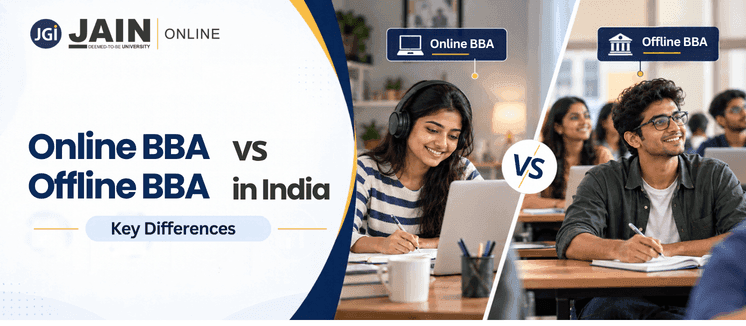 General
Online BBA vs Offline BBA in India: Key Differences
Online BBA vs Offline BBA in India comparison by JAIN Online, showing a student learning on a laptop and another attending classroom sessions, highlighting flexibility, learning experience, cost and career support.
Read More → General
Online MBA Exam Pattern in India: Assessment, Marks and Exam Format
JAIN Online blog banner featuring a woman studying with a laptop and notebook, highlighting Online MBA Exam Pattern in India with assessment, marks and exam format.
Read More →