
 General
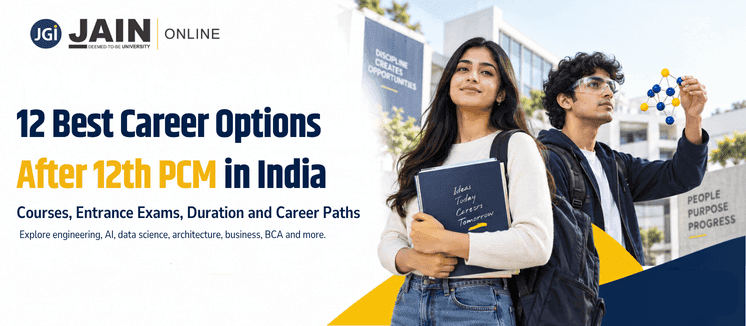
12 Best Career Options After 12th PCM in India
PCM does not limit you to engineering. Career options after 12th PCM range from engineering, computer applications, and data science to architecture, actuarial science, defence, the merchant navy, design, business, and pure sciences.
The right choice depends on what you enjoy and what you are good at. Students who prefer coding may consider engineering, BCA or data-focused courses, while those interested in design, finance, research, business or defence have different routes available.
This guide compares 12 career paths by course options, eligibility, entrance routes, duration, career opportunities and overall fit so you can shortlist options on more than popularity alone. The order is editorial and does not represent an official ranking.
How to Shortlist the Right Career Options After 12th PCM
Start by choosing two or three pathways that match both your interests and the kind of work you want to do. Studying PCM gives you several options; engineering does not have to be your default.
- Match your interests to the work involved. If you enjoy coding and logical problem-solving, compare BCA and Computer Science engineering. If business, marketing or managing people interests you more, explore BBA. If you enjoy physics, mathematics or scientific investigation, look at relevant B.Sc programmes.
- Compare the actual subjects. Read the semester-wise curriculum rather than choosing by the course name alone. A technology course can involve substantial mathematics, while a management course can still include accounting and statistics.
- Check what joining and completing the course requires. Compare eligibility, entrance tests, duration, total fees and learning format. Consider whether you want campus-based study or an online programme that fits around other commitments.
For students considering computing or management, JAIN Online’s BCA and BBA are two options to explore. Compare their subjects against your shortlisted interests before deciding which programme fits your goals.
What Are the Best Career Options After 12th PCM?
The main career options after 12th PCM include engineering, computer science and AI, data science, architecture, actuarial science, merchant navy, defence, design, business and management, pure sciences, pharmacy or eligible biotechnology routes, and computer applications. The best option depends on your interests, eligibility, preferred work style, course structure, and long-term career goals.
1. Engineering (B.Tech / B.E.)
Engineering is one of the most established career routes after 12th PCM. Major branches include Computer Science and Engineering, Electronics and Communication, Electrical, Mechanical and Civil Engineering, along with newer specialisations such as Artificial Intelligence, Data Science and Robotics.
Course structure and duration: B.Tech and B.E. programmes typically run for four years (eight semesters). Early semesters generally cover mathematics, physics, engineering fundamentals and introductory technical subjects, while later semesters focus on branch-specific coursework, laboratories, projects, electives and practical training.
Entrance and eligibility: Most engineering institutions require 10+2 with Physics, Chemistry and Mathematics. Admission may involve JEE Main, JEE Advanced, state CETs or university-level entrance and merit routes, depending on the institution.
Career routes: Graduates may move into engineering, software, manufacturing, infrastructure, electronics, consulting, research or technical business functions.
Best suited for: Students who enjoy structured problem-solving, mathematics, applied science and technical systems.
Consider before choosing: Compare the engineering branch alongside the institution's curriculum, laboratories, internships, faculty, industry exposure and recent placement records. The branch name alone should not determine the decision.
2. Computer Science & AI
Computer Science with AI-focused study combines core computing subjects with machine learning, artificial intelligence and data-related applications.
Course structure and duration: A B.Tech route generally follows a four-year structure covering core computer science before advanced AI-related topics. Students typically study data structures, algorithms, operating systems, databases, computer networks, and software engineering before progressing to subjects such as machine learning, deep learning, natural language processing, and computer vision.
Entrance and eligibility: Admission commonly follows the same routes as other engineering programmes, including JEE Main, JEE Advanced, state CETs and university-level entrance processes where applicable.
Career routes: Graduates may explore software development, machine learning, data engineering, AI-related development, cloud technologies and other computing roles. Postgraduate options can include M.Tech, MCA, M.Sc or specialised higher studies in computing and AI.
Best suited for: Students who enjoy programming, algorithms, mathematics and continuous technical learning.
Consider before choosing: Review how much of the curriculum covers core computer science versus specialised AI subjects. Projects, laboratories and practical programming exposure are particularly important in this field.
3. Data Science
Data Science combines mathematics, statistics, programming and domain knowledge to analyse data and support decision-making. PCM students can enter the field through different undergraduate routes rather than through a single prescribed degree.
Course structure and duration: Relevant routes include B.Sc Data Science, BCA programmes with data-focused electives and B.Tech programmes in Data Science or related specialisations. Duration therefore depends on the selected degree and institution.
What students may study: Common areas include probability, statistics, linear algebra, Python or R, databases, data visualisation, machine learning, data management and analytical projects using real datasets.
Entrance and eligibility: B.Tech routes may use engineering entrance examinations, while B.Sc and BCA programmes may use Class 12 merit, CUET or institution-specific admission processes. Applicants should check programme-specific Mathematics and subject requirements.
Career routes: Graduates may explore data analysis, business analysis, analytics, data engineering and related technology roles. Progression depends on technical skills, practical projects, internships and domain knowledge.
Best suited for: Students comfortable with mathematics, statistics, programming and interpreting patterns in data.
Consider before choosing: Compare the balance between mathematics, programming, statistics, analytics and practical project work rather than selecting a programme only because it carries the “Data Science” title.
4. Architecture (B.Arch.)
Architecture combines design, technical knowledge and an understanding of buildings and the wider built environment. It can suit PCM students who enjoy creative work alongside structured technical problem-solving.
Course structure and duration: B.Arch is a five-year professional undergraduate programme. The curriculum can include architectural design studios, building materials, construction, architectural history, structural concepts, environmental design, CAD, BIM, site exposure and project work.
Entrance and eligibility: Applicants should check the current Council of Architecture eligibility requirements for their admission year. Depending on the institution and admission route, NATA and/or JEE Main Paper 2A may apply.
Career routes: Graduates may work in architectural practice, sustainable design, project coordination, conservation, urban-development-related fields and other built-environment roles. Those intending to practise professionally and use the title “Architect” must meet the applicable Council of Architecture registration requirements.
Best suited for: Students interested in design, spatial thinking, buildings, technical drawing and long-form project work.
Consider before choosing: Architecture involves extensive studio work, design iteration, critique and project development. Students should assess whether this learning style suits them before enrolling.
5. Actuarial Science
Actuarial Science is a mathematics- and statistics-intensive field focused on assessing financial risk and uncertainty. It is commonly associated with insurance, pensions, investment, consulting and risk-management functions.
Course and qualification route: Students may pursue Mathematics, Statistics or an actuarial-focused undergraduate programme while progressing through professional actuarial examinations. Professional qualification is separate from completing an undergraduate degree and can continue alongside employment.
Entrance and eligibility: Academic admission requirements depend on the undergraduate programme selected. Students interested in the Institute of Actuaries of India route should review current ACET and student-membership requirements.
What students may study: The pathway can involve probability, statistics, financial mathematics, actuarial modelling, economics, risk analysis and related professional concepts.
Career routes: Roles can include Actuarial Analyst, Pricing Analyst, Risk Analyst and other positions across insurance, finance and consulting. Career progression usually depends on professional examinations, work experience and technical competence.
Best suited for: Students with strong mathematical ability, attention to detail and an interest in finance, statistics and risk.
Consider before choosing: A professional actuarial qualification involves ongoing exam preparation. Students should be comfortable combining academic study or employment with a longer professional qualification pathway.
6. Merchant Navy (B.Sc. Nautical Science / Diploma routes)
Merchant Navy careers can suit PCM students interested in marine operations, engineering and technical work at sea. The field includes deck, navigation and marine-engineering pathways.
Course structure and duration: Routes can include B.Sc Nautical Science, Marine Engineering and other approved maritime or pre-sea training programmes. Duration and subsequent certification requirements vary by pathway.
Entrance and eligibility: Eligibility is route-specific and can include strict academic, English-language, eyesight, physical and medical-fitness requirements. For example, B.Sc Nautical Science follows prescribed PCM, English and medical criteria under the applicable maritime framework. Students should verify the current requirements for the exact course and approved institution.
Career routes: Initial roles may include Deck Cadet, Engine Cadet, or Junior Engineer, followed by progression through required certifications, examinations, sea time, and experience.
Best suited for: Students comfortable with technical responsibilities, discipline, teamwork, travel and extended periods away from home.
Consider before choosing: Life at sea differs substantially from a conventional office career. Evaluate medical fitness, working conditions, extended periods away from family, and long-term lifestyle preferences carefully.
7. Defence Services via NDA & Technical Entry
Defence services provide technical and non-technical career routes for eligible students after Class 12. PCM students may qualify for pathways across the Army, Navy and Air Force depending on the applicable entry criteria.
Entry and eligibility: The NDA route involves the UPSC NDA examination, Services Selection Board assessment and applicable physical and medical standards. Educational requirements differ by service and entry route, so applicants should always use the current UPSC or service-specific notification.
Training and career route: Selected candidates undergo academic and military training followed by service-specific professional training. Career progression depends on service, branch, performance, training and applicable promotion requirements.
Career routes: Opportunities can include commissioned roles across the Army, Navy and Air Force, subject to the entry route and selection process.
Best suited for: Students interested in public service, leadership, discipline, teamwork and structured professional responsibilities.
Consider before choosing: Selection is competitive, and defence careers involve physical standards, structured training, transfers and potentially demanding postings. Students should assess both career interest and lifestyle expectations.
8. Design & Creative Fields (Fashion, Graphic, Interior Design)
Design can be a suitable route for PCM students whose interests extend beyond conventional technical careers. Options include B.Des, BFA and specialised programmes in product, graphic, fashion, interior, communication and digital design.
Course structure and duration: Programme structure varies by discipline and institution. Design degrees can include design theory, studio practice, visual communication, materials, digital tools, research and project-based learning.
Entrance and eligibility: Admission requirements differ by institution. Selection may involve design aptitude tests, creative or practical assessments, studio tests, interviews or portfolio review where applicable.
Career routes: Graduates may explore product design, graphic design, UX/UI, interior design, fashion, visual communication, branding and independent creative work.
Best suited for: Students who enjoy visual thinking, creativity, experimentation and solving problems through design.
Consider before choosing: Practical work and portfolio development can be important in many design careers. Compare studio exposure, software access, projects, internships and opportunities to build demonstrable work.
9. Management Foundation (BBA) & Business Pathways
BBA offers an undergraduate foundation in business and management and suits PCM students who want to move toward business-oriented rather than purely technical careers.
Course structure and duration: JAIN Online's Bachelor of Business Administration is structured across three years and six semesters.
Entrance and eligibility: Eligible applicants must have completed 10+2 from an applicable recognised board. Candidates due to appear for their Class 12 examination may also apply.
Programme options: JAIN Online offers BBA electives in Finance, Marketing, Human Resource Management, Digital Marketing and Data Science and Artificial Intelligence.
Career routes: Depending on elective choice, practical experience and employer requirements, graduates may explore entry-level opportunities in marketing, business development, operations, HR, finance-related functions and other business areas.
Best suited for: Students interested in management, entrepreneurship, finance, marketing, operations or business problem-solving.
Consider before choosing: Compare curriculum, electives, projects, internships and career support. A BBA provides a business foundation, but progression into specific roles also depends on practical skills and experience.
10. Pure Sciences (B.Sc. PCM) – Research & Academia
A B.Sc. in Physics, Chemistry, Mathematics or related disciplines can suit PCM students interested in deeper scientific study, quantitative work, teaching or research.
Course structure and duration: Programme duration and structure vary by university and may be offered through subject-focused, honours or multidisciplinary formats. Coursework can combine theoretical study, laboratory work, mathematical methods and projects.
Entrance and eligibility: Admission requirements vary by institution. Students should review the required Class 12 subjects, applicable merit criteria, entrance routes and current programme eligibility before applying.
Career routes: Graduates may continue into postgraduate study and research, pursue eligible teaching pathways after meeting applicable requirements, or move towards analytical and quantitative roles after developing relevant skills.
Best suited for: Students who enjoy scientific reasoning, mathematics, laboratory work, theory or research.
Consider before choosing: Many research and academic career paths require postgraduate education. Evaluate the complete education pathway rather than assessing only the undergraduate degree.
11. Pharmacy & Biotechnology (B.Pharm / B.Sc Biotech)
Pharmacy and biotechnology both involve scientific applications, but they are separate educational routes with different eligibility conditions and career pathways.
Course structure and duration: B.Pharm is a four-year professional undergraduate programme. Biotechnology programmes vary by university and degree structure and may include molecular biology, genetics, biochemistry, laboratory techniques, bioprocessing and related subjects.
Entrance and eligibility: Under Pharmacy Council of India requirements, eligible B.Pharm applicants can enter through the relevant 10+2 science route with Physics and Chemistry along with Mathematics or Biology. This means eligible PCM students can pursue B.Pharm. Biotechnology eligibility varies by university, and some programmes may specify Biology or other subjects.
Career routes: Pharmacy graduates may explore pharmaceutical production, quality assurance, quality control, regulatory affairs and related functions subject to applicable professional requirements. Biotechnology graduates may explore laboratory, research, bioprocessing and related scientific roles, with postgraduate study often relevant for specialised research careers.
Best suited for: Students interested in chemistry, pharmaceuticals, biotechnology, laboratory science and scientific applications.
Consider before choosing: Do not assume B.Pharm and Biotechnology have identical eligibility. Check subject requirements, laboratory infrastructure, practical exposure, regulatory considerations and postgraduate requirements for the exact programme.
12. Computer Applications and Software Careers (BCA)
BCA is an undergraduate computing route for students interested in software development, programming, databases, cloud technologies, data and other areas of information technology without following the engineering pathway.
Course structure and duration: JAIN Online's BCA runs for three years across six semesters.
Entrance and eligibility: Its current eligibility requires a recognised 10+2 qualification and does not specify Computer Science as a compulsory Class 12 subject. Candidates due to appear for their Class 12 examination may also apply.
Programme options: JAIN Online offers BCA electives in Computer Science and Information Technology, Data Science and Artificial Intelligence, Cloud and DevOps, Cyber Security and Artificial Intelligence, and Artificial Intelligence and Machine Learning.
Career routes: Depending on skills, elective choice, practical experience and employer requirements, graduates may explore software development, application support, testing, web technologies, databases, cloud, analytics and related IT roles. MCA and other postgraduate technology programmes are also possible progression routes.
Best suited for: Students interested in computing, logical problem-solving and applied programming who prefer a computer-applications route rather than B.Tech.
Consider before choosing: Compare programming depth, practical laboratories, projects, elective options, internships and postgraduate pathways when evaluating BCA programmes.
How to Choose the Right Path After 12th PCM
Choosing a career after 12th PCM involves balancing interest, aptitude, market demand, and practical constraints such as costs and location. Use this decision framework to weigh options:
- Assess interests and strengths: Identify whether you prefer mathematics, programming, scientific research, design, business, structured service careers or applied technical work.
- Check eligibility first: Verify Class 12 subject requirements, entrance examinations, medical requirements or professional-registration conditions.
- Compare the complete education pathway: Consider duration, total cost, postgraduate requirements and professional examinations.
- Review practical learning: Compare laboratories, projects, internships, studios, field training and other applied components.
- Test your interest: Introductory courses, small projects, workshops and conversations with students or professionals can help validate a career direction.
- Shortlist realistically: Compare two or three options using eligibility, curriculum, costs, entrance requirements and likely progression
Use these steps: list 3 shortlisted careers, research top colleges and entrance timelines, try a short practical course or internship in each, and then commit with a one-year plan to enter the chosen programme and build relevant skills.
Entrance Exams and Admission Routes
Entrance requirements differ by course and institution, and annual examination calendars change.
- Engineering: JEE Main is an important national engineering route, while JEE Advanced applies to eligible candidates seeking admission to IIT programmes. State CETs and university-specific routes are also used.
- Architecture: Depending on the institution and admission system, students may need NATA or JEE Main Paper 2A.
- Defence: The NDA route uses the UPSC NDA examination followed by the relevant selection and medical process.
- Actuarial Science: Students interested in the Institute of Actuaries of India pathway should review ACET and current student-membership requirements.
- BCA, BBA and B.Sc: Admission can be merit-based, use CUET or follow university-specific procedures.
Always check the current official examination and admissions calendar rather than relying on dates from previous admission cycles.
Application tips and prioritisation: Create a timeline spreadsheet with application deadlines, exam dates, mock test schedules and document submission windows. Track national, state and private university application deadlines together. These schedules can overlap, so submit each application before its deadline rather than waiting for another examination or admission process to finish. Early application for scholarships and hostel seats is critical.
Preparation advice: Start revision early, use mock tests, solve previous years' question papers, join focused coaching only if it adds value, and allocate time for board exams alongside entrance prep. If your chosen institution requires a portfolio, prepare one that follows its submission guidelines and demonstrates your creative process. Check the specific admission requirements before assuming a portfolio is needed.
Skills Developed Through PCM That Can Support Different Careers
Studying Physics, Chemistry and Mathematics can build skills that are relevant across several technical, scientific and business fields. The value of these skills depends on how students develop and apply them through further study, projects and practical experience.
- Quantitative reasoning: Mathematics can support work involving statistics, finance, engineering, analytics and scientific problem-solving.
- Logical problem-solving: Physics and mathematics encourage structured approaches to analysing problems and testing possible solutions.
- Technical learning: A quantitative foundation can support further study in programming, engineering, data science and related technology fields.
- Experimental thinking: Laboratory work in Physics and Chemistry introduces students to observation, measurement, testing and interpretation.
- Cross-disciplinary options: PCM students can move into engineering, computing, architecture, actuarial science, design, management, pure sciences and other eligible routes.
These skills do not automatically create an employment advantage. Communication, practical experience, course choice, projects and role-specific skills also influence career opportunities.
Diploma and Certificate Routes After 12th PCM
Students who do not want to begin immediately with a full undergraduate degree may explore diploma or certificate routes in programming, analytics, design or other technical skills.
Duration, recognition and progression opportunities vary considerably. Compare these qualifications against the actual requirements of your intended career rather than treating them as direct substitutes for BCA, B.Sc or B.Tech.
Can PCM Students Pursue Medical or Allied Health Courses?
PCM-only students should verify eligibility carefully before applying to healthcare-related programmes. Many medical and health-science routes specify Biology or other subject requirements.
B.Pharm is an important exception: eligible candidates can enter through the relevant science route with Mathematics or Biology alongside Physics and Chemistry, subject to the applicable admission requirements.
Check other health or allied-health programmes individually against the current regulator, university, or admission prospectus.
Salary Expectations and Market Reality
Starting salaries vary considerably by degree, institution, specialisation, employer, location, practical skills and previous experience.
Rather than selecting a course based on headline salary figures, compare recent institution-specific placement information, relevant job descriptions and role-specific market data.
Practical Next Steps: Application Checklist & Counselling Tips
Use this actionable checklist to move from decision to admission:
- Shortlist careers (top 3): Based on interest, aptitude tests and trial courses, narrow down to three viable paths.
- Rank entrance exams: Put JEE, NATA, state CETs, CUET and any university-specific tests on a timeline and prioritise preparation slots.
- Prepare documents: Keep mark sheets, ID proofs, category certificates, passport-size photos and domicile proofs ready for online application windows.
- Apply early: Many seats, scholarships and early-bird hostel options require early application. Missing initial counselling rounds can limit choices.
- Seek internships: Short internships or projects over vacations help build a resume and confirm fit; even 2-6 week internships add value.
- Talk to alumni & counsellors: Speak with recent graduates from colleges you target to get honest placement and course quality feedback.
- Evaluate fees & scholarships: Compare ROI: tuition fee, living costs, expected starting salary and scholarship availability. For expensive private colleges, calculate net cost after expected placements and loan obligations.
- Plan backups: Keep choices that align with your skills and allow transfers or lateral entry later. For example, a B.Sc. in PCM with coding courses can lead to an MSc or data roles later.
Final tip: Treat the next two years as an investment period. Build technical skills, communicate clearly, and gain real-world experience through internships. These moves make your application stand out regardless of the initial college brand.
PCM opens a wide range of careers in India, from engineering, AI, and data science to architecture, the merchant navy, and actuarial science. The best choice aligns your strengths with market realities and gives room for continuous learning. Use this guide as a comparative map: shortlist, test with short courses or internships, and then commit with a one-year action plan to enter and excel in your chosen path.
Which Career Option Should You Choose After 12th PCM?
There is no single best career after 12th PCM. The right choice depends on your aptitude, interests, eligibility, budget, preferred work style and the amount of education or professional training required.
Shortlist two or three realistic options and compare entrance requirements, curriculum, total cost, practical exposure and career pathways. Salary can factor into the decision, but course fit and longer-term progression should carry equal weight.
Explore Technology and Business Pathways With JAIN Online
Students considering technology or business after 12th PCM can also compare JAIN Online's BCA and BBA programmes.
Both programmes run for three years across six semesters. Eligible applicants must have completed 10+2 through an applicable recognised board, and candidates due to appear for their Class 12 examination may also apply.
JAIN Online's BCA offers five electives: Computer Science and Information Technology, Data Science and Artificial Intelligence, Cloud and DevOps, Cyber Security and Artificial Intelligence, and Artificial Intelligence and Machine Learning.
JAIN Online BBA offers Finance, Marketing, Human Resource Management, Digital Marketing, and Data Science and Artificial Intelligence.
Students deciding between the two routes can also compare BCA vs BBA based on curriculum focus, technical depth, and career direction.
Frequently Asked Questions (FAQs)
Can PCM Students Pursue BCA After 12th?
Yes. BCA can suit PCM students who enjoy logical problem-solving and want to learn programming or build software applications. At JAIN Online, our three-year online BCA accepts students who have passed 10+2 from a recognised board. Our Computer Science and Information Technology curriculum introduces programming in C and mathematical foundations. You do not need prior coding experience, but you should be willing to practise regularly. If you are unsure, try a beginner programming exercise to see whether you enjoy solving problems through code.
Can PCM Students Choose BBA Instead of Engineering?
Yes. PCM students are not restricted to technical degrees. BBA can suit learners interested in management, finance, marketing, business analytics or entrepreneurship, subject to the institution's eligibility requirements.
Which Career Options After 12th PCM Do Not Require JEE?
JEE is relevant to specified engineering and architecture admission routes. BCA, BBA, many B.Sc programmes, actuarial pathways and design programmes use other admission methods, although they may have their own entrance examinations or selection requirements.
Can PCM Students Switch to Commerce or Management Courses After 12th?
Yes. Many management programmes accept applicants from multiple Class 12 streams, subject to institution-specific eligibility criteria.
Is Mathematics Required for Every Career Option After 12th PCM?
No. Mathematics is central to fields such as engineering, actuarial science and many data-related routes, while management and design programmes may use different eligibility criteria.
Which Career Options After 12th PCM Are Suitable If I Do Not Like Coding?
Options can include architecture, actuarial science, pure sciences, design, defence, merchant navy, BBA and other eligible pathways. The right choice depends on whether you prefer mathematics, design, science, business, service careers or practical fieldwork.
Can I Pursue BCA Without Computer Science in Class 12?
Yes, at institutions whose eligibility criteria do not require it. JAIN Online's current BCA eligibility requires a recognised 10+2 qualification and does not list Computer Science as a compulsory Class 12 subject.
Which PCM Career Options Have Shorter Course Durations?
BCA, BBA and some B.Sc routes may be shorter than four-year engineering or five-year architecture programmes, although exact programme structures vary by institution. Diploma and certificate routes can be shorter still, but their recognition and career suitability vary separately.
Related Blogs
 General
Can I Do BCA Without Maths in India? Eligibility Guide
BCA without Maths in India eligibility guide by JAIN Online, featuring a student exploring computer applications, coding and higher education opportunities.
Read More →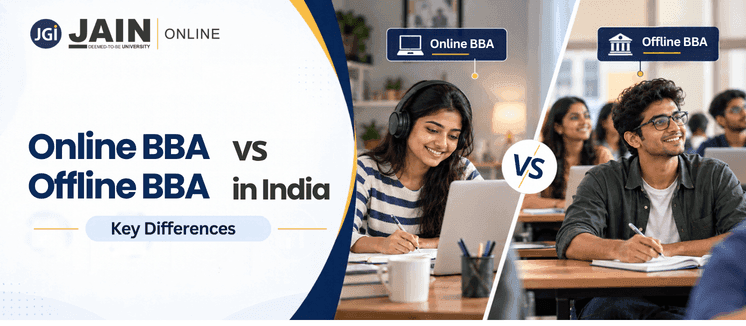 General
Online BBA vs Offline BBA in India: Key Differences
Online BBA vs Offline BBA in India comparison by JAIN Online, showing a student learning on a laptop and another attending classroom sessions, highlighting flexibility, learning experience, cost and career support.
Read More → General
Online MBA Exam Pattern in India: Assessment, Marks and Exam Format
JAIN Online blog banner featuring a woman studying with a laptop and notebook, highlighting Online MBA Exam Pattern in India with assessment, marks and exam format.
Read More →